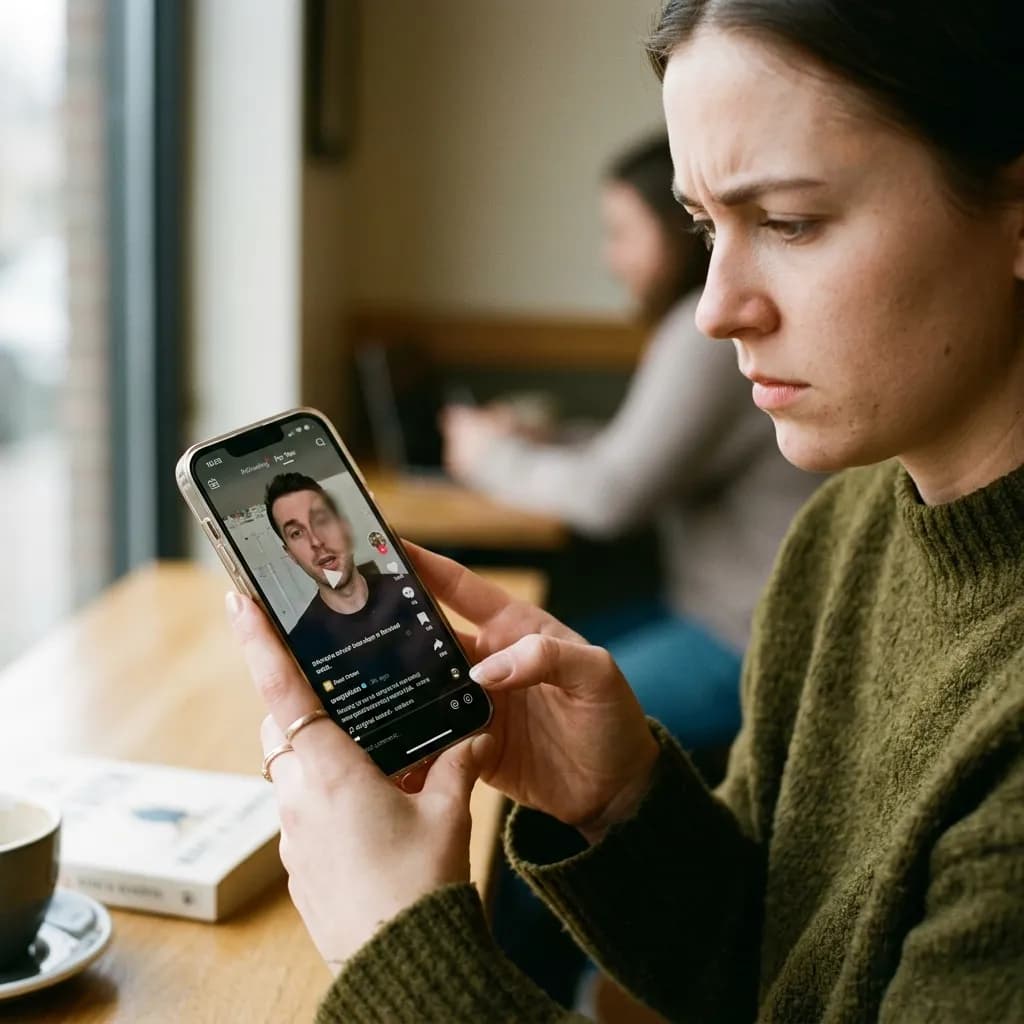
The Rise of Social Media Deepfake Fraud
In recent years, social media platforms like TikTok, Instagram, and YouTube Shorts have seen a massive surge in AI-generated deepfakes. What started as entertaining face-swap videos has rapidly evolved into a sophisticated tool for financial fraud, identity theft, and misinformation.
Scammers use advanced AI tools to clone the voices and faces of trusted figures—celebrities, influencers, and even family members—to promote fake cryptocurrency giveaways, bogus investment schemes, or phishing links. Because these platforms are designed for quick, infinite scrolling, users often drop their guard, making them highly susceptible to these ultra-realistic synthetic videos.
Visual Red Flags: How to Analyze the Video
While AI generation models like Sora and Kling have improved drastically, they still leave behind subtle visual artifacts. If a video seems slightly "off," look closely for these common deepfake indicators:
- Unnatural Blinking and Eye Movement: Deepfakes often struggle to replicate the natural rhythm of human blinking. The eyes might look glassy, unfocused, or fail to track movement realistically.
- Edge Blurring and Glitches: Pay attention to the edges of the person's face, especially around the hairline, jawline, and neck. Face-swapping algorithms often leave a slight blur or noticeable pixelation where the fake face meets the original head.
- Lighting Inconsistencies: The lighting on the face should match the lighting of the background. AI models sometimes generate faces with studio-perfect lighting that clashes with a dimly lit or outdoor background.
- Weird Hands and Teeth: Generative AI notoriously struggles with complex anatomy. Look for extra fingers, morphing hands, or teeth that lack distinct individual shapes and instead look like a solid white block.
Audio Discrepancies: The Voice Cloning Giveaway
Audio is often the weak link in a deepfake scam. Voice cloning AI can mimic the tone and pitch of a person, but it struggles with natural human cadence.
Listen for a lack of breathing sounds or emotional inflection. Scammers often use a "text-to-speech" pipeline that results in a robotic, perfectly paced delivery that doesn't match the urgency or context of what is being said. Furthermore, check the lip-sync alignment. If the mouth movements don't perfectly match the audio (especially on hard consonants like "P" and "B"), you are likely watching a deepfake.
How AIGuardian Can Help
Relying solely on the naked eye is becoming increasingly difficult. That's why professional media and trust-and-safety teams use automated deepfake detection tools. AIGuardian's AI Video Deepfake Detector analyzes temporal inconsistencies across frames, detecting the invisible algorithmic artifacts that human eyes miss.
If you encounter a suspicious video, the best defense is to pause, verify the source, and remember: if a celebrity is suddenly offering you free Bitcoin on TikTok, it's almost certainly an AI deepfake scam.