The Spread of AI Videos on Social Media
From convincing deepfakes of celebrities on TikTok to hyper-realistic AI-generated historical documentaries on YouTube, synthetic media is everywhere. As platforms struggle to enforce their own AI disclosure policies, the burden of verifying authenticity often falls on the viewer.
The Challenge of Synthetic Media Verification
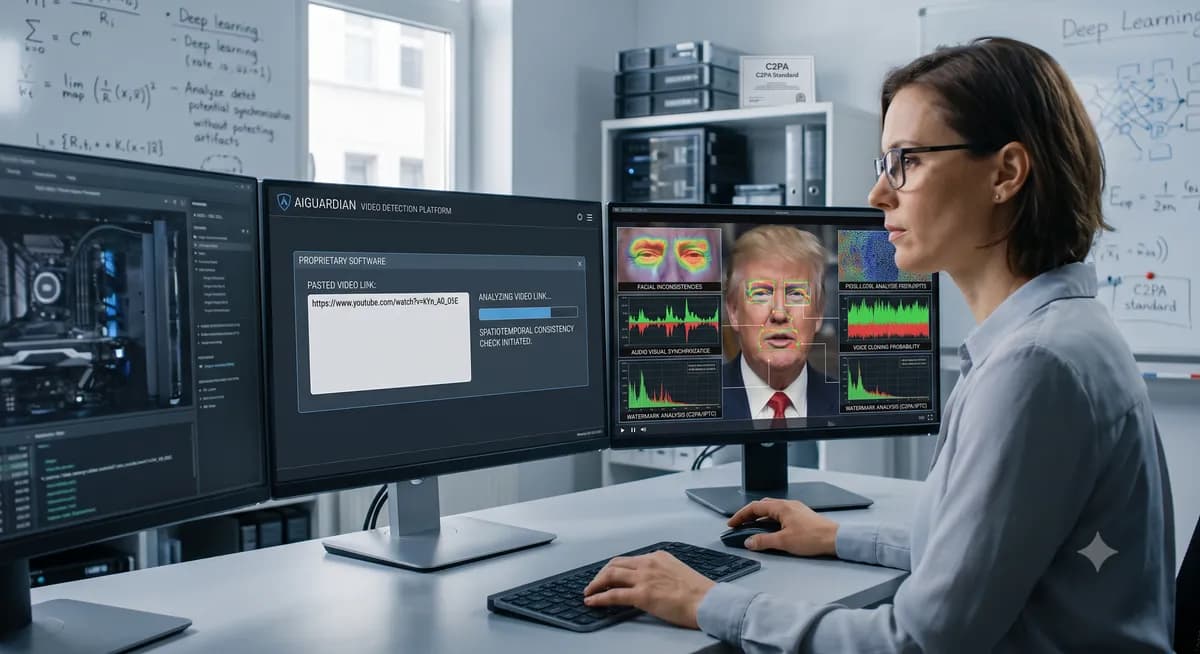
Social media feeds are flooded with viral video clips. When verifying suspicious clips from YouTube or TikTok, professional verification platforms like AIGuardian analyze temporal inconsistencies and generative artifacts across consecutive frames.
This approach provides deep forensic insights:
- Temporal Consistency: Analyzes optical flow and frame-to-frame stability to catch warping.
- Biometric Pulse Signatures: Checks subtle skin reflectance (rPPG) across frames that generative models fail to synthesize.
- Diffusion Artifacts: Identifies underlying generative noise signatures left behind by models like Sora, Kling, and Veo.
How to Use an AI Video Deepfake Detector
Verifying a video is straightforward. Save or download the video clip to your device, and upload it into the AIGuardian AI Video Detector. The system automatically inspects frame-by-frame spatiotemporal inconsistencies, boundary blending, and generative artifacts.
Conclusion
As Sora, Kling, and other video models make synthetic media indistinguishable from reality, tools that verify video content with explainable forensic evidence are essential for maintaining digital trust.